

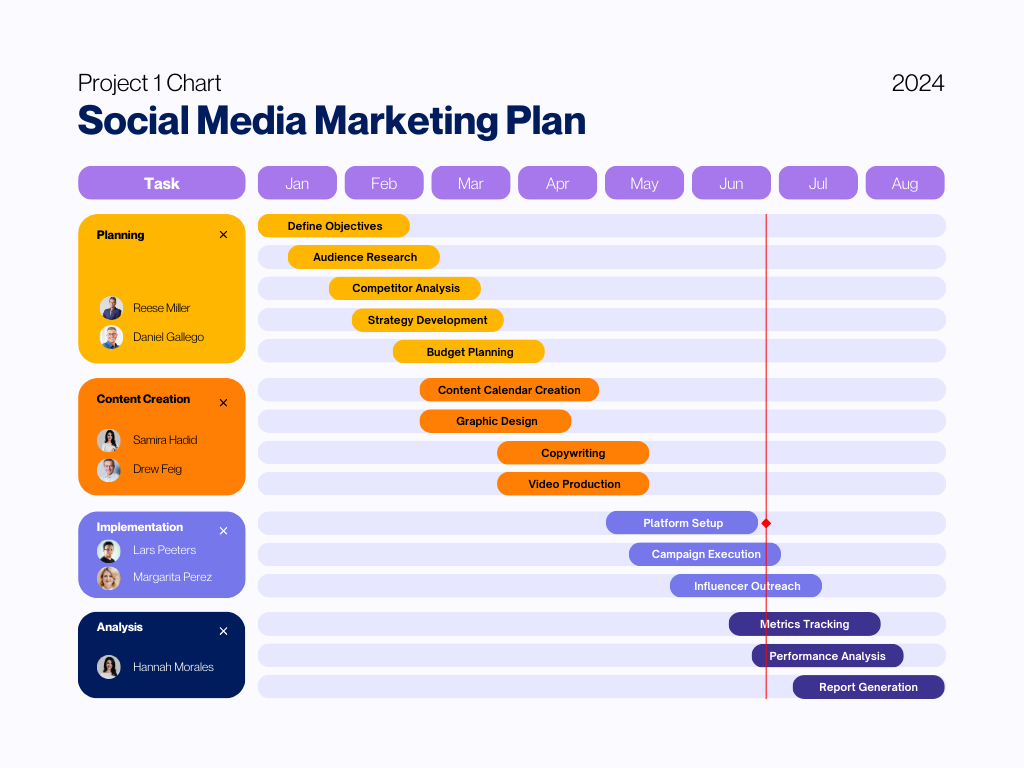
Peeking into the market’s secret lair can be a game-changer for new businesses or products, showing them the ropes and what to expect from their target audience. Marketing is like having a crystal ball that helps them know if their growth plans are on the right track.
Let’s start by asking what a social media marketing plan is and what some common goals are. An SMM plan is a comprehensive strategy that outlines how a business or organization can use social media platforms to achieve its marketing objectives.
What’s in your Marketing Plan?
This plan typically includes an analysis of the business’s target audience, the social media platforms most frequently used, and the type of content that will resonate with them. Common goals of a social media marketing plan may include:
- Increasing brand awareness
- Driving word-of-mouth recommendations
- Driving traffic to a website or landing page
- Generating leads
- Increasing sales
- Improving customer engagement
- SEO engine optimization (SEO) to increase traffic and conversions
Another goal is to establish the business as an authority in its industry by sharing relevant and informative content. Additionally, social media can improve customer service by responding to inquiries and addressing customer concerns in a timely and helpful manner.
Establishing a Strong Online Presence
An SMM plan may include tactics such as regularly posting valuable content, running paid social media advertising campaigns, collaborating with influencers, and tracking and analyzing key metrics such as engagement rates and click-through rates to achieve these goals.
A well-crafted SMM plan can help businesses build a solid online presence, connect with their target audience, and drive growth and success.

Social Media Marketing is a powerful tool for businesses to reach new customers and boost sales growth. With the right strategies, businesses can increase brand visibility and engage with their audience in a meaningful way, resulting in significant sales growth.
Professor Robinson, Principles of Marketing
Improve Your Brand’s Reach and Engagement with These Social Media Strategies:
- Define Your Goals: Before starting any social media campaign, you must define your goals. Do you want to increase brand awareness, drive website traffic, or generate leads? Once you have a clear goal in mind, you can tailor your social media strategy accordingly.
- Identify Your Audience: Knowing your audience is critical for any successful social media strategy. You need to understand who your target audience is and what platforms they are using. This information will help you create content that resonates with them.
- Create Engaging Content: Engaging content is critical to driving engagement on social media. Your content should be visually appealing, informative, and shareable. To keep your audience engaged, you can use a mix of text, images, videos, and infographics.
- Use Hashtags: Hashtags are an essential part of social media marketing. They help to categorize your content and make it more discoverable. Use relevant hashtags that are trending or popular in your niche to reach a broader audience.
- Monitor Your Analytics: To gauge the success of your social media strategy, you need to monitor your analytics. Track metrics such as engagement rate, reach, and conversions to see how your content performs. Use this information to make data-driven decisions and adjust your strategy accordingly.
Ultimately, creating a social media strategy requires careful planning, thoughtful content creation, and constant monitoring. By following these tips, you can increase your brand’s reach, engagement, and, ultimately, your bottom line.
After Setting Goals, Let’s talk about the Competitive Analysis
A SWOT analysis is a strategic planning tool used to evaluate a business or organization’s strengths, weaknesses, opportunities, and threats. This analysis helps businesses identify and evaluate their current position in the market and make informed decisions about future strategies.
- Strengths and weaknesses refer to internal factors within the organization that contribute to its success or failure. Strengths could include a unique product or service, skilled employees, or a strong brand reputation. Weaknesses may include a lack of resources, poor management, or outdated technology.
- Opportunities and threats refer to external factors that impact the organization. Opportunities could include new technologies, growing markets, or changes in consumer behavior. Threats could include new competitors, economic downturns, or changing regulations.
By conducting a SWOT analysis, businesses can gain a better understanding of their position in the market and develop strategies to capitalize on their strengths, address their weaknesses, take advantage of opportunities, and mitigate threats.
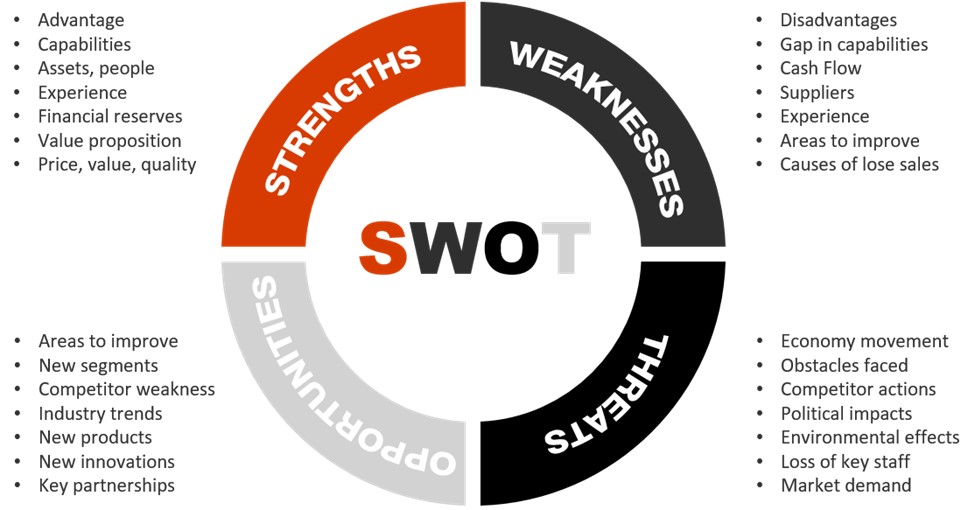
Here is an example of the data required to evaluate a business in the current environment regarding its strengths and weaknesses (internal) and opportunities and threats (external). This is an excellent exercise to go through on an annual basis.
- Strengths: What will be your company’s strengths when you launch it? How do you see this changing in the future?
- Weaknesses: If you were the competition, what would you say to prospective customers about where your company’s products or services are weak or deficient? What are the most important weaknesses to overcome first?
- Opportunities: With product improvements or new partnerships, where could your business grow? What new segments could you enter in the future?
- Threats: What external factors could pressure your business’s growth or cash flow? Which of these threats can you control? Which ones can’t you control?
Social Media Monitoring Tools: Google Analytics
Google Analytics is a free web analytics service offered by Google that tracks and reports website traffic. It is a powerful tool that provides valuable insights into how users interact with a website.
Using Google Analytics has several benefits. First, it helps website owners better understand their audience. The tool provides valuable information about visitors’ demographics, interests, and behavior. This information can be used to create targeted marketing campaigns and improve the overall user experience.
Secondly, Google Analytics helps optimize website performance by providing detailed data on traffic sources, page views, bounce rates, and other metrics. Website owners can use this information to identify pages that need improvement and optimize them for better performance.
Thirdly, Google Analytics provides valuable insights into the effectiveness of marketing campaigns. It can track the performance of various marketing channels and campaigns, such as social media, email, and paid advertising. This information can be used to optimize marketing efforts and improve return on investment (ROI).
Sensing a Good Vibe?
Discover more from Holistic Lifestyle Blog
Subscribe to get the latest posts sent to your email.
 Holistic Lifestyle Blog